
What Are the Early Symptoms of Breast Cancer?
Early signs of breast cancer may include a new breast lump, swelling under the arm, changes in breast size or shape, nipple discharge, nipple inversion, skin dimpling or unusual redness and swelling. Some people have no noticeable symptoms in the early stages.
A breast lump is one of the most recognised signs of breast cancer. But did you know that breast cancer can sometimes develop without a noticeable lump or pain?
Changes in breast shape, skin texture or the nipple can also be warning signs. Knowing what to look for can help you recognise unusual changes and seek medical attention without unnecessary delay.
Not every breast change means cancer. However, understanding the possible breast cancer symptoms and getting them evaluated is important.
Here are seven changes you should be aware of.
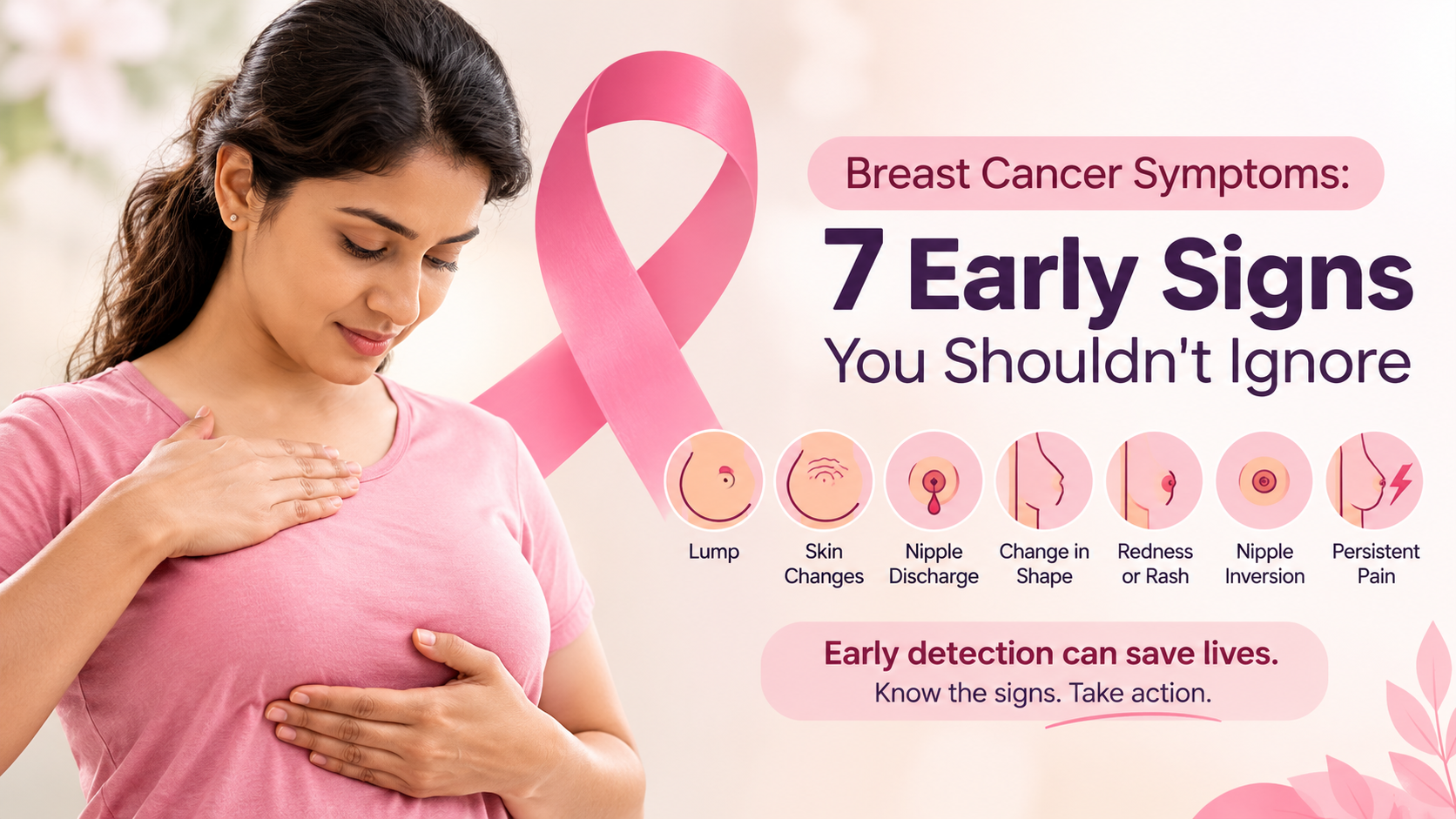
1. A New Lump in the Breast or Underarm
A new lump in the breast is one of the most commonly recognised breast cancer symptoms. A concerning lump may feel firm, have an irregular shape or be difficult to move. However, breast cancer lumps can also feel different from this description. Not all breast lumps are cancerous. Cysts, fibroadenomas and other non-cancerous conditions can also cause lumps. When to consult a doctor: If you notice a new lump or unusual thickening in your breast or underarm, arrange a medical examination. Do not wait for the lump to become painful.
2.Changes in Breast Size or Shape
It is natural for breasts to have slight differences in size or shape. However, a new or unexplained change deserves attention, especially if it affects one breast. Look for: • A noticeable change in breast size • New swelling in part or all of a breast • A change in the usual contour or shape • An unusual difference that was not present before These changes can have several causes, but persistent or unexplained changes should be assessed by a doctor.
3. Dimpling or Changes in Breast Skin
Breast cancer can sometimes cause visible changes in the skin covering the breast. You may notice dimpling, puckering or skin that resembles the surface of an orange peel. Other possible changes include unusual skin thickening, swelling or redness. Skin changes do not automatically indicate breast cancer, but they should not be ignored. Important: If redness and swelling develop rapidly, particularly when the breast feels warm or appears noticeably different, seek prompt medical assessment.
4.Nipple Discharge, Especially if It Contains Blood
Nipple discharge can occur for many reasons and is not always a sign of cancer. However, discharge that occurs spontaneously, particularly from one nipple, or contains blood should be medically evaluated. This is especially important when the discharge is new and is not related to pregnancy or breastfeeding. Avoid repeatedly squeezing the nipple to check for discharge. Instead, consult a doctor to understand the cause.
5. A Nipple That Suddenly Turns Inward
Some women naturally have inward-pointing nipples, and this is not necessarily a health concern. However, a nipple that was previously outward-facing and has recently become inverted may require examination. Other changes to look for include: • New flattening of the nipple • Unusual changes in nipple direction • Persistent scaling or rash around the nipple • Changes in the surrounding areola A new nipple change should be assessed, even when no lump is present.
6. Persistent Breast or Underarm Pain
Does breast pain mean cancer? Not necessarily. Breast pain is common and is often associated with hormonal changes, cysts or other non-cancerous conditions. Breast cancer does not usually cause pain in its early stages. However, some people with breast cancer may experience discomfort. If breast or underarm pain is persistent, unexplained or accompanied by other breast changes, consult a healthcare professional. Do not rely on pain alone to decide whether a breast change is serious.
7. Unusual Swelling or Redness of the Breast
Unexplained swelling, warmth or redness can sometimes be associated with breast cancer, including a less common form called inflammatory breast cancer. These symptoms may develop even when there is no obvious lump. Breast infections can cause similar changes, so a clinical examination is important. If your breast becomes unusually swollen, red or warm, particularly if the changes appear quickly, seek prompt medical attention.
Early Attention Can Make a Difference
Recognising a breast change is not the same as receiving a cancer diagnosis. Many breast changes are caused by non-cancerous conditions. However, ignoring a persistent change can delay the identification of a condition that requires treatment. If you notice a new or unusual breast symptom, consulting a qualified healthcare professional is the appropriate next step.